
Most hunters spend a lot of time thinking about camo patterns, scent control, and shoot lanes. The coating on the inside of a hunting blind? That usually gets zero attention — until something goes wrong. Maybe the walls start reflecting light at the wrong angle, or moisture finds its way in and the structure starts to soften. Sometimes it’s subtler than that: a slight sheen on the interior panels that deer seem to notice even when you can’t figure out why.
The truth is, the coating you apply to a hunting blind — whether it’s a permanent ground blind, a box blind on a lease, or a custom-built elevated stand — plays a bigger role in your overall success than most people give it credit for. This isn’t just about looks. It’s about durability, scent, light behavior, and how long that blind holds up against the elements year after year.
What Makes a Good Hunting Blind Coating?
Walk into any outdoor store and you’ll find flat black spray paint marketed toward hunters. And sure, for a quick seasonal fix, it gets the job done. But once you start hunting out of a permanent structure — something you’ve invested real money and labor into — it makes sense to think longer term.
A quality hunting blind coating needs to check several boxes at once. It has to block light reflection on the interior. It needs to resist moisture, both from the outside elements and from the condensation that naturally builds up inside a closed blind on a cold morning. It should be tough enough to handle the bumps and scrapes that happen every time gear gets loaded in and out. And ideally, it won’t off-gas chemicals with strong odors that linger in the blind and tip off wary animals.
That’s a demanding list, and it’s exactly why more serious hunters have started looking past standard paint toward polyurea-based coatings. These formulations were originally developed for industrial applications — think truck bed liners, pipeline coatings, and marine surfaces — but their properties translate surprisingly well to hunting applications.
Interior Coatings: Killing Reflections and Controlling Light
Here’s something a lot of hunters don’t think about: whitetail deer have eyes positioned on the sides of their heads, which gives them an extraordinary field of view. They’re also highly sensitive to movement and irregular light patterns. A glossy interior surface inside a box blind — even a subtle one — can catch light from a window opening and create a faint glow that doesn’t belong in the natural environment.
When you coat the interior of your blind with a flat, matte-finish material, you eliminate that problem entirely. The goal is to make the inside of the blind as close to a visual void as possible. Light comes in through your shooting windows, but nothing bounces back out. Deer looking toward the blind see darkness inside the openings rather than any faint reflected image.
Flat black is the obvious choice for color, but texture matters just as much. Smooth surfaces reflect more than textured ones. A slightly rough, pebbled coating — which is naturally what you get with a sprayed polyurea or polyurethane application — absorbs and scatters light far better than a painted-on flat coat. It’s a small detail, but small details add up over a season.
Exterior Coatings: Weatherproofing That Actually Lasts
The outside of a hunting blind takes a beating. UV exposure, rain, temperature swings from freezing nights to warm afternoons — all of this works against standard paints and finishes over time. Plywood boxes especially tend to show wear fast. Edges delaminate, the surface coating peels, and before long you’ve got exposed wood soaking up moisture.
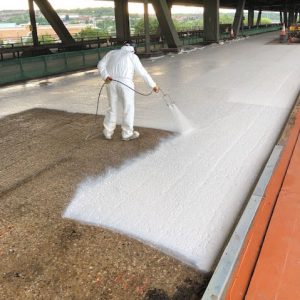
A properly applied exterior coating changes that math significantly. When you seal the outside of a blind with a tough, flexible coating that bonds directly to the substrate, you’re essentially creating a weather barrier that moves with the structure. Wood expands and contracts. A rigid paint cracks when that happens. A flexible coating — particularly one based on polyurea chemistry — stretches slightly rather than fracturing, keeping the seal intact through seasonal temperature shifts.
This is especially important on the roof and around any seams or joints. Water always finds its way to these spots first. Once it gets past the surface and into the wood or the framing, you’re dealing with rot, and rot means rebuilding. Investing in a proper exterior coating upfront is almost always cheaper than addressing structural damage a few seasons down the road.
For hunters who want to understand the coating options available and how they compare, the difference between polyurea and polyurethane is worth understanding before making a purchase. Both have their place, but they behave differently in terms of cure time, flexibility, and moisture tolerance during application.
Scent Considerations — The Part Nobody Talks About
Scent control is one of the more overlooked aspects of choosing a blind coating. Fresh paint or solvent-based coatings can off-gas for days or even weeks after application. If you’re coating a blind right before season and then hunting out of it immediately, you may be introducing an unnatural odor into your setup — which is the last thing you want after spending time managing entry and exit routes to keep human scent out of your hunting area.
The better approach is to coat well ahead of the season. Most coatings, including polyurea-based products, fully cure within 24 to 72 hours, but allowing several weeks before hunting lets any residual off-gassing dissipate completely. Some hunters go a step further and rub down the cured interior with dirt, cedar branches, or other natural materials from the area to add local scent over the coating before they start hunting.
Water-based formulations tend to off-gas less than solvent-based ones, and they’re generally better for enclosed applications where ventilation is limited. If you’re applying coating inside a box blind that doesn’t have great airflow, this is worth factoring into your product selection.
Application Tips for a Cleaner Finish
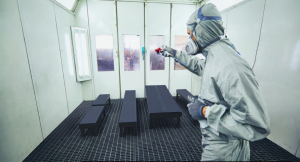
Whether you’re rolling on a coating, brushing it, or using a spray system, prep work is what separates a coating that lasts from one that peels in the second season. The surface needs to be clean, dry, and free of any old loose paint or debris. On bare wood, a primer coat helps adhesion significantly. On metal surfaces — like a steel box blind frame — a rust-inhibiting primer should always go on first.
For spray-applied coatings, two thinner passes usually give better results than one heavy coat. Heavy coats tend to sag on vertical surfaces before they cure, leaving uneven texture. Thin passes build up uniformly, and the texture comes out more consistent. On interior ceilings and upper walls, this matters especially — sags and drips in those areas can catch light in ways that defeat the whole purpose of going matte.
If you’re looking at high-performance spray coatings that offer both durability and a proper matte finish, it’s worth exploring purpose-built polyurea products designed for exactly this kind of application. The right product makes the application process cleaner and the finished result noticeably tougher than what you get from off-the-shelf hardware store options.
Long-Term Maintenance
Even the best coatings benefit from a look-over each year before the season starts. Walk around the outside of the blind and check for any areas where the coating may have been chipped or scraped — common around door edges and corner trim. Touch those spots up before moisture has a chance to work its way in.
On the interior, check for any areas that might have developed a slight sheen from contact with gear or clothing over the previous season. A quick scuff with fine sandpaper and a touch-up coat brings the matte finish back. This doesn’t need to be a major project — a yearly half-hour inspection and minor touch-up is usually all it takes to keep a well-coated blind in good shape for a decade or more.
Hunting blinds are an investment, and the coating you put on them determines how long that investment holds up. Get the coating right once, maintain it a little each year, and you’ll spend far more time actually hunting than you will rebuilding or replacing structures that wore out before their time.